Playful Design: Using Childish Hand Drawn Jungle Animal Sets
The Irresistible Charm of Hand-Drawn Animal Art
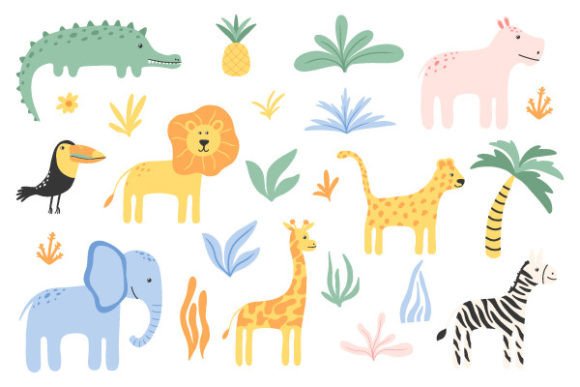
There’s something universally appealing about hand-drawn art, especially when it involves animals. A childish hand drawn set of jungle animals taps into a sense of nostalgia, warmth, and approachability that polished, hyper-realistic vector graphics sometimes miss. This style isn’t about technical perfection; it’s about personality. Think of the slightly wobbly lines of a lion’s mane, the charmingly oversized eyes of a giraffe, or the whimsical spots on a zebra. These imperfections are the very features that make the artwork feel authentic, human, and incredibly engaging. For designers and creators, this aesthetic offers a powerful tool to cut through digital noise and connect with audiences on an emotional level.
Unlike a sleek sans serif font or a formal serif font, a set of illustrations like this communicates a specific tone before a single word is read. It signals playfulness, creativity, and a lighter touch. The appeal lies in its versatility across demographics. While the style is "childish," its application in adult-focused projects—from packaging design for artisanal goods to social media graphics for a wellness brand—can create a striking and memorable contrast. It’s a visual language that says, "We don’t take ourselves too seriously, but we do take our craft seriously."
Where This Jungle Set Shines: From Branding to Personal Projects
Understanding where a childish hand drawn set of jungle animals works best is key to leveraging its full potential. Its strength is in projects that require a distinct personality and immediate emotional resonance. Consider its use in logo design for a children’s bookstore, a family-friendly café, or an eco-tourism startup. The hand-drawn quality makes the brand feel accessible and grounded, fostering trust and recognition. Similarly, in editorial design, these illustrations can transform a mundane magazine layout or blog header into an inviting visual story, perfect for articles on parenting, travel, or sustainable living.
For entrepreneurs and small business owners, incorporating this style into brand identity materials—like business cards, thank-you notes, or product tags—adds a layer of thoughtful, artisanal quality. It’s a creative font equivalent in illustration form, helping a brand stand out. In the digital realm, these savannah animals excel in web design as engaging hero images, animated website elements, or delightful icons. They are also gold for social media graphics, where scroll-stopping visuals are paramount. A toucan perched on a letter or an elephant carrying a message can make a campaign feel more shareable and human.
For personal use, the applications are boundless. Crafters and hobbyists can use these vectors for scrapbooking, custom nursery decor, birthday party invitations, and educational materials. The set’s cohesive theme—featuring a lion, zebra, giraffe, elephant, toucan, and crocodile—ensures visual harmony when used together, while each animal can stand alone as a focal point. This flexibility makes it a valuable design asset for anyone looking to inject joy and creativity into their projects without needing advanced illustration skills.
Making It Work: Practical Guidance for Designers and Creators
Integrating a childish hand drawn set of jungle animals into your work requires thoughtful execution to maintain professionalism and impact. Start by evaluating the project’s fit. This style thrives in contexts where whimsy and approachability are assets. It might clash with a brand aiming for ultra-luxury or severe corporate minimalism. Once you’ve confirmed the fit, consider the visual hierarchy. Use the animals strategically—perhaps as a subtle background pattern, a bold central image, or an accent icon—to guide the viewer’s eye without overwhelming the core message.
Font pairing is crucial when combining this illustration style with typography. The playful, hand-drawn nature pairs beautifully with clean, simple typefaces. A sturdy geometric sans serif font can provide a modern, balanced counterpoint, ensuring readability for body text. Alternatively, a gentle script font can complement the whimsical feel for headlines, but use it sparingly to avoid visual clutter. Always test pairings at various sizes to ensure legibility, especially in web design where screen resolutions vary.
When sourcing such a set, look for a premium font or illustration package from a reputable marketplace. A quality set will offer multiple file formats (like SVG, PNG, and EPS), allowing for easy scaling and color customization. Check the licensing carefully, especially for commercial font or asset use. Ensure the license covers your intended applications, whether for client work, merchandise, or digital products. Review the included styles—a good set might offer outlined, filled, and pattern variations, giving you more creative control.
Finally, maintain consistency. If you’re building a brand identity with these animals, establish clear guidelines for their use: which colors are appropriate, what spacing to use around them, and in what contexts they appear. This ensures that the playful element enhances, rather than fragments, your overall design system. By treating these illustrations with the same strategic care as any other design asset, you can harness their charm to create work that is not only beautiful but also effective and memorable.